4000-300-968
🌐 English ▼

4000-300-968
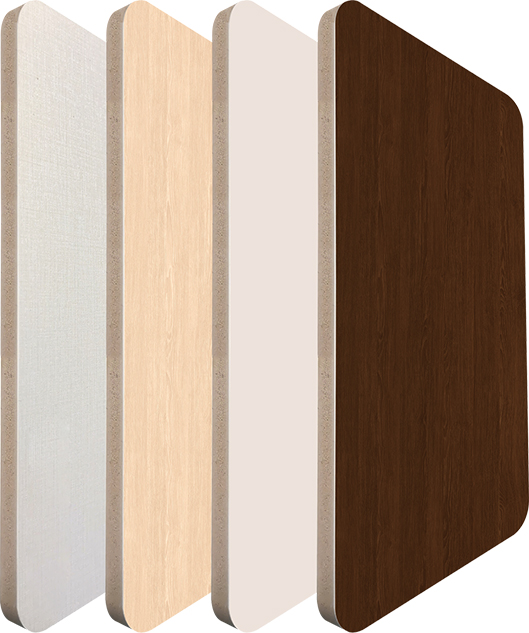
Bamboo and wood fiberboard is a new type of environmentally friendly board made of bamboo and wood fiber as the main raw material and processed through high temperature and high pressure and other processes. It mainly includes natural plant fibers such as bamboo and wood. After extraction, grinding and other processes, these fibers are mixed with other auxiliary materials such as waterproofing agents, fire retardants, formal-free glue, etc. to form the basic material of bamboo and wood fiberboard.
production process
Mixing extrusion:The treated bamboo and wood fiber raw materials and other additives are put into an extruder according to precise proportions, melted and mixed at high temperatures, and then extruded. This process can be produced continuously and has high efficiency.
Hot pressing:Use pur hot melt adhesive, first melt it, and then guide it through CNC equipment to adhere the plate to the pvc film, and then cool and adhere, and use the air moisture reaction to expand the chain to improve the adhesive force and heat and low temperature resistance, and finally make the finished product The surface is smooth and the texture is beautiful.

Natural bamboo and wood fiber is used as raw material, which contains no harmful substances, does not produce pollution during the production process, has no peculiar smell, is harmless to human health, meets green environmental protection requirements, and is especially suitable for home decoration and public places with high environmental protection requirements.
It has high bending, compression and tensile strength, stable internal structure, and is not easy to deform or crack. At the same time, it also has a certain weight. Compared with some traditional plates, it is relatively light in weight while ensuring strength, making it easy to transport and install.
Special moisture-proof agents are added during the production process to make it have good moisture-proof properties. Water and moisture are difficult to enter, which can effectively prevent deformation, mold and other problems caused by humidity. It is suitable for use in humid environments such as kitchens, toilets, and basements.
After special treatment, it has a certain self-extinguishing ability under the action of fire source, which can effectively delay the spread of fire, and will not produce toxic gases during combustion, which is less harmful to human beings.
It can effectively block the transmission of noise and create a quiet and comfortable environment indoors; at the same time, it has good heat insulation properties, can reduce the temperature difference between indoor and outdoor, reduce the energy consumption of air conditioners, heating and other equipment, and achieve energy-saving effects
The surface has been specially treated, such as laminating, printing, embossing, etc., and has the texture and color of natural bamboo and wood. It has exquisite texture, diverse varieties and numerous colors, which can create different decorative styles such as nature, warmth and elegance to meet personalized aesthetic needs
1. Material inspection:Carefully check whether the specifications, models and colors of the bamboo and wood fiberboard meet the requirements, and check whether the board has damage, deformation, color difference and other problems. At the same time, prepare supporting materials such as keel, buckles, glue, and nails.
2. Tool preparation:Prepare the tools needed for construction, such as cutting machines, chainsaws, electric drills, screwdrivers, tape measures, level, ink fountain, hammer, etc.
3. Site cleaning:Clean the construction site to ensure that the construction area is clean and tidy, free from debris and obstacles, and create good conditions for construction.
1. Wall treatment:If bamboo and wood fiberboard is installed on the wall, the wall needs to be leveled. Check whether the wall is flat. If there are any irregularities or cracks, use putty or cement mortar to repair and level it. Ensure that the flatness error of the wall is within the specified range, and it is generally required that the flatness error does not exceed 3 mm.
2. Ground treatment:If bamboo and wood fiberboard is installed on the ground, dust, oil and other debris on the ground must be cleaned up to ensure that the ground is clean and dry. For uneven ground, polishing or leveling is needed to ensure that the surface of the plate is flat after installation.
1. Spring line positioning:According to the size and installation requirements of the bamboo and wood fiberboard, use an ink fountain to pop up the installation position line of the keel on the surface of the base layer. In general, the spacing of the keel should be determined based on the length and strength of the plate, usually 300-600 mm.
2. Install the keel:Fix the keel on the substrate with nails or screws according to the position of the spring line. If it is a light steel keel, special connecting pieces need to be used to connect; if it is a wood keel, ensure that the material of the keel is dry and free from decay. Pay attention to the verticality and levelness of the keel during installation, and use a level to check and adjust it.
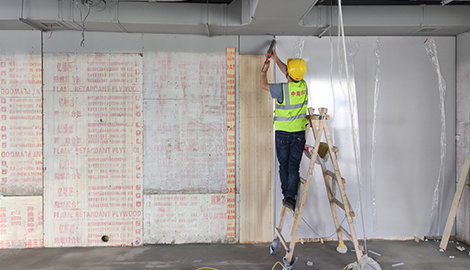
1. Cutting plate:According to the installation size and actual conditions on site, use a cutting machine or chainsaw to cut the bamboo and wood fiberboard into appropriate length and width. Pay attention to the flatness and verticality of the incision when cutting to avoid burrs or oblique edges.
2. Install the first board:Align one end of the first cut bamboo and wood fiberboard with the keel and fix it on the keel with snaps or nails. During installation, ensure that the plate and keel are closely fitted and the plate joints are uniform and consistent. If glue is used, apply glue evenly on the back of the plate, then quickly stick it on the keel, and apply a certain amount of pressure to make it stick firmly.
3. Install other plates in turn:Install other bamboo and wood fiber boards in order, and pay attention to whether the splice with adjacent boards is tight and flat for each board installed. During the installation process, you can use a wooden square or rubber hammer to gently tap the plate to make it better fit with the keel, and at the same time adjust the width of the plate seam to ensure the overall appearance. For parts that need to be bent, appropriate bending and installation can be carried out according to the flexibility of the plate, but care should be taken not to cause damage to the plate by excessive bending.
4. Treatment of Yin and Yang corners:At the yin and yang corners, special treatment of bamboo and wood fiberboard is needed. For male corners, you can use male corner lines to decorate and fix the lines on the edge of the plate to make it more beautiful; for female corners, you can cut the plate into a 45-degree angle for splicing, or use female corner lines to process it to ensure The corners are smooth and beautiful.
1. Edge closing:After the installation of the bamboo and wood fiberboard is completed, the edges need to be closed. Special closing lines, such as aluminum alloy lines, PVC lines, etc., can be used to fix them on the edge of the plate to cover the cuts and gaps in the plate to make it more beautiful and tidy.
2. Handling at sockets and switches:When encountering positions such as sockets and switches, holes need to be made in the bamboo and wood fiberboard according to their positions and size. Pay attention to the accuracy of the size when opening holes to ensure that sockets and switches can be installed and used normally. After installation, you can use a decorative cover to cover the gaps around the sockets and switches to coordinate them with the overall decoration effect.
1. Quality inspection:After the construction is completed, the installation quality of the bamboo and wood fiberboard is comprehensively inspected. Check whether the flatness, verticality, and width of the plate meet the requirements, and whether the plate has problems such as looseness, deformation, and cracks. If there is any problem, make adjustments and repairs in a timely manner.
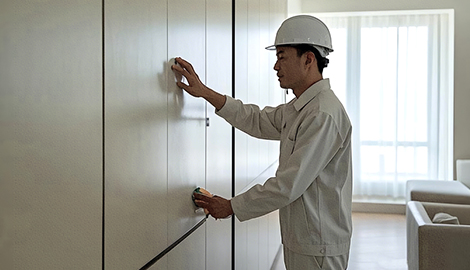
2. Clean up the site:Clean up debris, dust and garbage on the construction site, and put construction tools in place. Wipe the surface of the bamboo and wood fiberboard with a clean damp cloth to remove stains and dust on the surface to make the surface of the board clean and tidy.



4000-300-968
150-0719-8066
 WeChat Official Account
Mobile Official Site